Watch
Step through the slides. The trainer's words are under each one.
Inspection, cleaning and the practical test
Shotgun, lesson 8 of 8: keeping it safe to use, and what the assessment asks
This is lesson 8: inspection, cleaning and the practical test. Keeping it safe to use, and what the assessment asks. We carry on with Johan and his instructor, Anel, at Ridgeview.
Basic inspection, every time
- 1Unload and checkOpen action, chambers empty
- 2Barrel clear and dryLook through from the breech end
- 3Look it overStock, hinge, action, choke
- 4Anything odd?Stop and get it checked
Basic inspection starts, as always, with unloading and checking the gun is empty. Then the unit standard's key check: the barrel is clear and dry. Open the action and look through the barrel from the breech end towards the light. You want to see clear daylight and no oil pooling. Then look over the stock for cracks, the hinge for looseness on a break-action, the action and the choke. If anything looks or feels wrong, stop and get it checked.
Basic cleaning with a cleaning kit
- 1Unload and checkAlways first
- 2Brush the barrelA bore brush on a rod
- 3Patch itClean patches until they come out clean
- 4Light oilA thin coat on metal, wiped off the bore before shooting
- 5StoreIn the safe, unloaded
Basic maintenance in the unit standard means cleaning and lubricating without tools, though a cleaning kit is fine. Unload and check first, and take all cartridges out of the room. Run a bore brush on a rod through the barrel, then clean patches until they come out clean. Wipe a thin coat of light oil on the metal, and run a dry patch through the bore before you next shoot, so no oil is left in it. Then back into the safe.
You, or a gunsmith?
| Basic maintenance: you | A gunsmith or expert |
|---|---|
| Cleaning the barrel and chambers | Taking the action apart with tools |
| Light oil on metal parts | A loose hinge or action |
| Wiping the stock | A crack in the stock |
| Checking the barrel is clear and dry | A dent or bulge in the barrel |
Here is the line. You may clean the barrel and chambers, oil the metal lightly, wipe the stock and check the barrel is clear and dry. Anything that needs tools to take apart, a loose hinge, a cracked stock, or a dent or bulge in the barrel goes to a gunsmith or recognised expert. When in doubt, it goes to the gunsmith.
The practical test for a shotgun
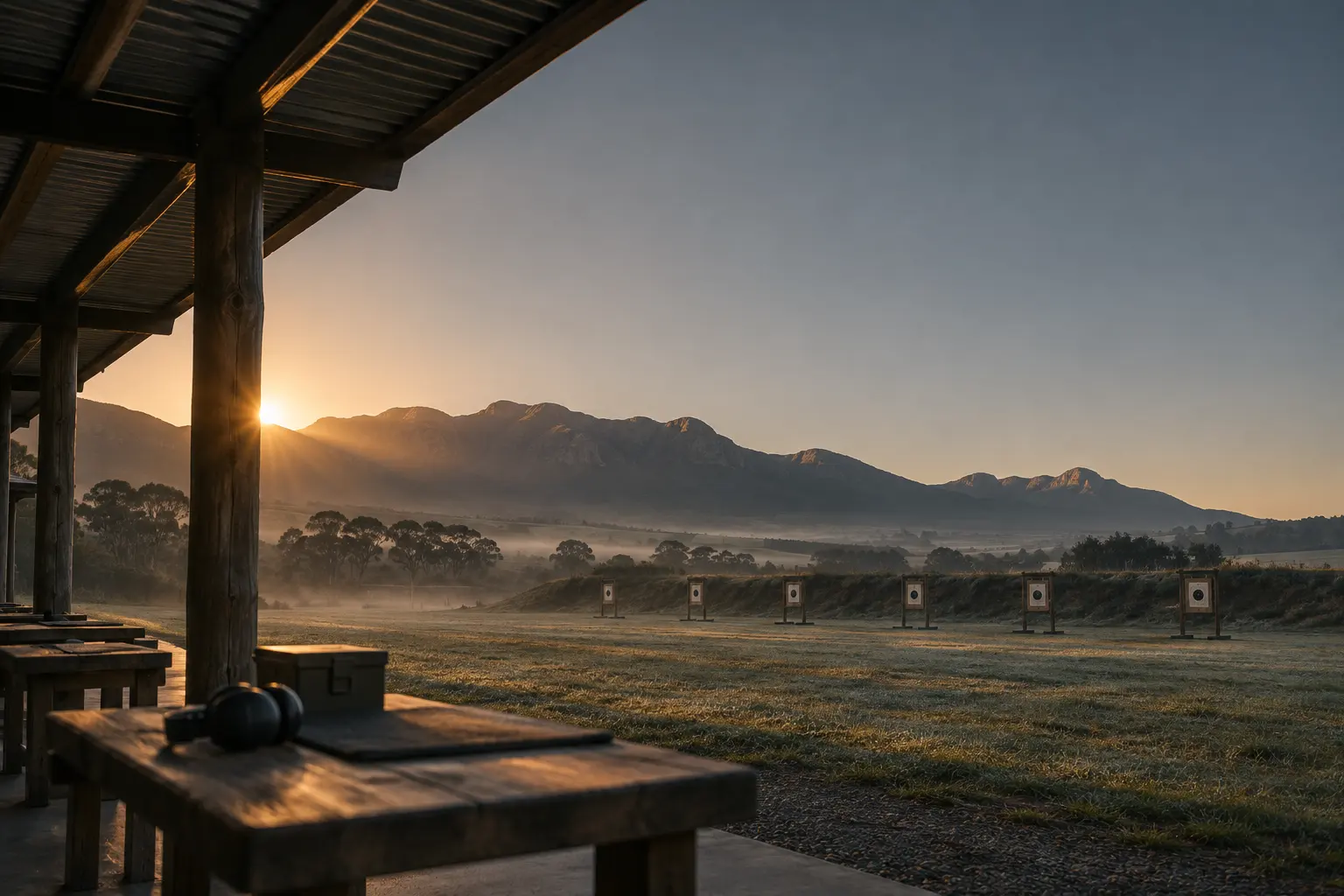
The practical assessment for unit standard 119652 is short and exact. You must hit five shots out of five from a distance of at least ten metres. The target is A5-sized wood, a falling plate or paper, and may not be larger than A4, though it may be smaller. The distance may be increased, never decreased. You fire unsupported, without resting the shotgun on anything, though two hands are of course allowed. Your assessor also watches your safe handling the whole time.
The assessor watches everything, not just the target
- Safe muzzle direction throughout
- Finger off the trigger until on target
- Safe loading and unloading
- Handling a malfunction if one happens
Hitting the target is only part of it. The assessor watches the whole of the first outcome: a safe muzzle direction at all times, your finger off the trigger until you are on the target, and safe loading and unloading. If a malfunction happens, they want to see you deal with it calmly and correctly. Many people lose marks for handling, not for missing.
Johan's assessment
Johan checks his gun, loads on the line, breaks five targets from 10 m, opens his gun and shows it clear.
On assessment day, Johan checks his over-and-under, walks to the line with it open, loads only when Anel calls it, mounts properly, and hits all five targets from ten metres. Then he opens the gun, unloads and shows Anel it is clear. Five from five, and safe throughout. Johan passes. His certificate comes from Ridgeview, the accredited provider; the competency certificate itself comes from SAPS.
Your turn
Before the final quiz
- Do the exercise: You or a gunsmith?
- Answer four quick questions on this lesson
- Book your practical assessment
Before you move on, do the exercise, You or a gunsmith?, and answer four quick questions on this lesson. Then, in your own time: book your practical assessment with your accredited trainer. After this comes the final quiz: ten questions on the whole course, and you need seven to pass.
Do: You or a gunsmith?
After a season of clays, Johan finds these things. Decide whether each is basic maintenance he may do, or a job for a gunsmith.
Check
Four quick questions. The reason shows as soon as you answer.
Apply
Where this shows up in your own life.
Book your practical assessment with your accredited trainer
Ridgeview Firearms Academy and its people are fictional. This is study material written from the Firearms Control Act and the SAQA unit standards. It isn't an accredited course or legal advice; your accredited training provider runs the official tests.