Watch
Step through the slides. The trainer's words are under each one.
Malfunctions
Shotgun, lesson 7 of 8: failure to fire, feed or extract, and what to do
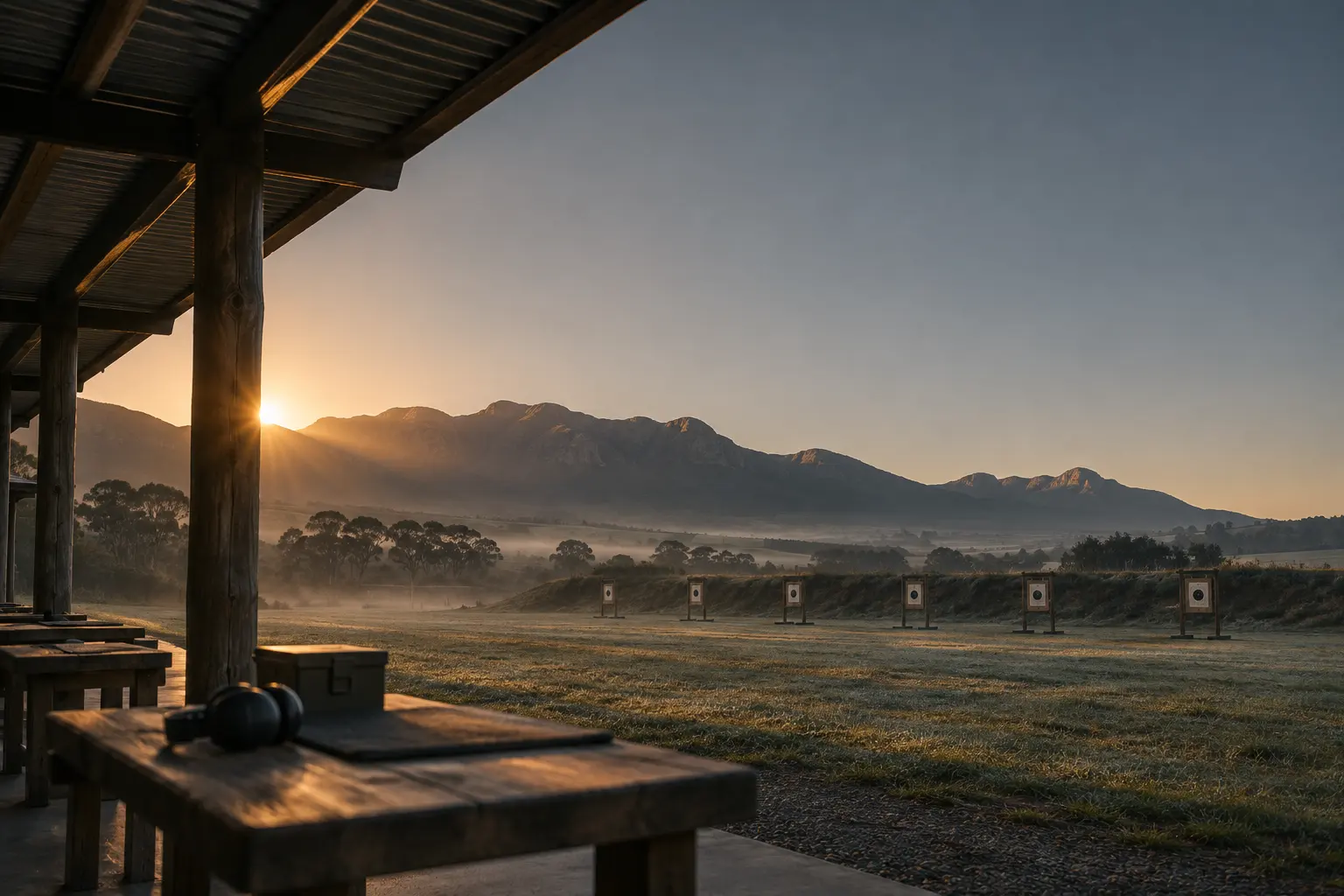
This is lesson 7: malfunctions. Failure to fire, feed or extract, and what to do. We carry on with Johan and his instructor, Anel, at Ridgeview.
Three malfunctions the unit standard names
| Malfunction | What you notice | Common causes |
|---|---|---|
| Failure to fire | Click, no bang | Faulty primer, light strike, safety on, dirty or worn firing pin |
| Failure to feed | No cartridge goes into the chamber | Short-stroking a pump, wrong or damaged cartridge, dirty action |
| Failure to extract | The fired hull stays in the chamber | Dirty or rough chamber, swollen hull, worn extractor |
The unit standard names three malfunctions. Failure to fire: you press the trigger and hear a click but no bang. Causes include a faulty primer, a light strike, the safety being on, or a dirty or worn firing pin. Failure to feed: no cartridge goes into the chamber, often because a pump wasn't worked fully back and forward, or because of a wrong or damaged cartridge, or a dirty action. Failure to extract: the fired hull stays stuck in the chamber, usually from a dirty or rough chamber, a swollen hull or a worn extractor.
Click, no bang: what to do
- 1Keep it pointed safelyDownrange, finger off the trigger
- 2WaitAt least 30 seconds, in case it's a hangfire
- 3Open and unloadMuzzle still safe
- 4InspectCartridge and barrel; is the barrel clear?
If you get a click and no bang, the most important thing is what you don't do. Don't open the gun straight away and don't look down the barrel. The cartridge could be a hangfire, one that fires late. Keep the muzzle pointing downrange, finger off the trigger, and wait at least 30 seconds. Then open the action, unload, and look at the cartridge and the barrel. If the primer is barely dented, the problem may be the gun, not the cartridge.
A weak shot means stop
- A pop or weak recoil instead of a normal shot
- The wad or shot may be stuck in the barrel
- Stop, unload and check the barrel is clear
Sometimes a shot sounds like a pop and the recoil is weak. The wad or even the shot may have stopped in the barrel. Firing again into a blocked barrel can burst it. So stop, unload, and look through the barrel from the breech end until you see clear daylight. If something is stuck, it goes to a gunsmith or your instructor to clear, not a stick from the veld.
Failure to feed or extract
- Failure to feed
- Muzzle safe, finger off
- Work the action fully back and forward
- Check the cartridge is the right one
- Failure to extract
- Muzzle safe, finger off
- Open the action fully
- Remove the hull by hand if it lifts easily
For a failure to feed on a pump, keep the muzzle safe and your finger off the trigger, and work the action fully back and fully forward. Check the cartridge is the right gauge and length and isn't damaged. For a failure to extract, open the action fully and, if the hull lifts out easily by hand, take it out. Follow your trainer's drill for your model; actions differ.
Clear it yourself, or see a gunsmith
| You may clear it | Take it to a gunsmith |
|---|---|
| A dud cartridge, after waiting 30 seconds | Repeated failures to fire with good cartridges |
| A short-stroked pump | A hull that is stuck fast |
| A hull that lifts out by hand | Anything stuck in the barrel |
| A wrong cartridge, removed and replaced | A cracked stock, loose hinge or bulged barrel |
The unit standard asks you to know which problems you may clear yourself and which go to a gunsmith. You can deal with a dud cartridge after waiting, a short-stroked pump, a hull that lifts out by hand, or a wrong cartridge. Take it to a gunsmith for repeated failures to fire with good cartridges, a hull stuck fast, anything lodged in the barrel, a cracked stock, a loose hinge or a bulged barrel. If you are unsure, it goes to the gunsmith.
Johan's bottom barrel clicks
On stand 4, Johan's bottom barrel clicks. He keeps the gun pointed downrange and counts to thirty.
On stand 4 Johan's bottom barrel clicks. He does exactly the right thing: keeps the gun pointed downrange, finger off the trigger, and waits thirty seconds before opening it. The primer is barely dented, and it happens again with a fresh cartridge. That is not a dud, it is the gun. Anel sends it to a gunsmith, who finds a worn firing pin.
Your turn
Before lesson 8
- Do the exercise: What went wrong?
- Answer four quick questions on this lesson
- Ask your trainer to show you the drill for your model
Before you move on, do the exercise, What went wrong?, and answer four quick questions on this lesson. Then, in your own time: ask your trainer to show you the malfunction drill for your model. Next: inspecting and cleaning your shotgun, and the practical test.
Do: What went wrong?
Johan and the club members describe what happened. Name the malfunction.
Check
Four quick questions. The reason shows as soon as you answer.
Apply
Where this shows up in your own life.
Ask your trainer to show you the malfunction drill for your model
6. Shooting fundamentals
Next lesson8. Inspection, cleaning and the practical test
Continue →Ridgeview Firearms Academy and its people are fictional. This is study material written from the Firearms Control Act and the SAQA unit standards. It isn't an accredited course or legal advice; your accredited training provider runs the official tests.